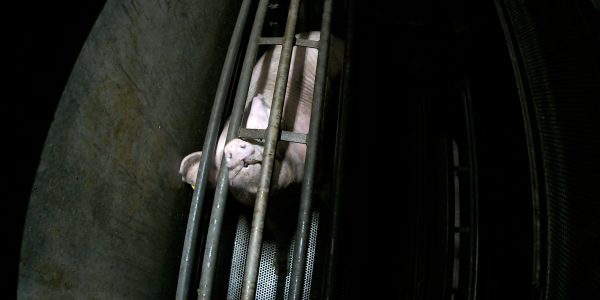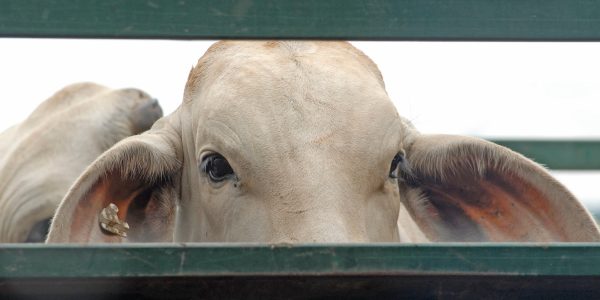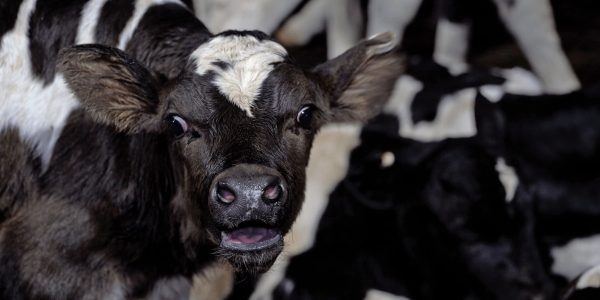
Some time back, the UN released a very revealing report that revealingly revealed that our habit of eating meat is contributing more to global warming than all the world's trains, planes and automobiles combined. Yep – they say a whopping 18 percent of all the world's greenhouse gas emissions come from livestock.
It seems that back home our pollies might have missed this memo. While other countries are looking at ways to ween their citizens off meat, yesterday our Federal opposition spokesperson for agriculture (that is, the guy who's supposed to know a lot about agriculture), said he reckoned that killing all the feral camels in Australia would be a great way to help save the planet. WTF!?
He says that shooting one million of these unfortunate animals would be like taking 3 percent of Australia's cars off the road. That left me wondering which animals will need to be taken out next to curb the other 97%?
*facepalm*
Anyone who hasn't been asleep for the past five years knows that you don't have to shed blood to save the planet. I know it. The UN knows it. Even Al Gore knows it now. I mean -- just eat the tofu burger and nobody has to die (in fact, we'll all probably live a little bit longer)!
What a bloody mess… :(
If you could tell Mr Cobb what you think of his bloody plan to "save the environment", what would you say? Wait! You can! John.Cobb.MP@aph.gov.au
This just in! Al Gore (a.k.a. “Mr Global Warming” himself) has finally confronted the biggest inconvenient truth of all: that meat-eating is responsible for much of the world's most devastating environmental problems: "It's absolutely correct that the growing meat intensity of diets around the world is one of the issues connected to this global crisis - not only because of the CO2 involved, but also because of the water consumed in the process … You could add in the health consequences as well".
It's obvious when you think about it, isn't it? When you need to feed about 10 kilos of food to a cow just to produce merely one kilogram of ‘beef' (and let's not forget the millions of methane-producing burps and farts let off by the global cattle herd every single day), eating green to save the environment is a no-brainer.
Strangely it took the world's most renowned environmental campaigner three years since producing “An Inconvenient Truth” to realise that you can't be a meat-eating environmentalist. And for some reason, Gore stops short of leaving all animals off his plate, saying that he has now “cut back sharply”. A good step in the right direction for sure, but I guess those of us who care more about animals and the planet than the taste of dead flesh will still need to offset Gore by eating green every day (and really, with food this good – who wouldn't want to!?)
No doubt Gore's new appreciation for environmentally sustainable foods will also help his waste line and keep him campaigning a good few years longer :)
And on that note, Yahoo! News wants to know if you'd go veg to help save the planet.Please vote yes!
While saving animals doesn't often appear at the top of governments' agendas, it is starting to sneak in by way of "Green Living"! In a recent newsletter from Sydney City Council I noticed they are promoting Meat Free Mondays.
Meat Free Mondays is a global campaign encouraging people to help curb climate change by having at least one meat-free day per week. If you think this sounds like a great idea, then you're in good company! The campaign already has the support of Paul McCartney, Richard Branson, Moby and the head of the International Panel on Climate Change (ie. the guy who advises the UN on all things climatey).
Governments promoting vegetarianism really makes me all goose-pimply with excitement. And this story gets better! Cause Sydney's not the only city either. In May, the Belgian city of Ghent launched a brilliant initiative to urge the whole city to go vegetarian every Thursday.
If you think Sydney Council is on a winning idea, then why not write to your school/uni/workplace to encourage them to combat climate change too and adopt Meat Free Mondays. Just think of the lives saved if they do!
So if you're like many Australian families, you may well have a copy of the CSIRO Total Wellbeing Diet (as my parents do). This 240 page book could have easily been summarised in one word – "meat" because that's pretty much the main ingredient in every meal.
But what you may not know is that CSIRO scientists (the good guys) discovered that high meat consumption is linked with bowel cancer and presented this to the CSIRO board (bad guys) in April 2006. Yet in October 2006 the CSIRO ran a second print of their bestselling book, despite the fact the book claimed "Studies have shown that fresh red meat (beef and lamb) is not a significant risk factor for colorectal cancer." LIES! So basically the book was reprinted and continues to be sold despite containing completely misleading information about the risks of cancer and meat. Not to mention the fact it promotes a diet that is extremely harmful to the environment!
Thankfully there is a good bloke out there by the name of Geoff Russell making sure that this blatant spread of misinformation does not go unheard, and he's written his own book: CSIRO Perfidy. Now I'll be honest, I didn't know the definition of 'perfidy' before I heard about this book, but when you read the definition, you'll see that there's no better word to describe the actions of the CSIRO.
Perfidy: –noun, 1. deliberate breach of faith or trust; faithlessness; treachery: perfidy that goes unpunished.
So the good news is you can pick up a copy of CSIRO Perfidy from the Unleashed store. I recommend anyone whose parents have a copy of the CSIRO Total Wellbeing Diet to buy a copy of this book for them, to give them the full story. As Professor Peter Singer (Philosopher, Author of Animal Liberation, Hero) said "Read this book: it may save your life. And if enough people read it, it just might save the planet.''
It's time to whip out your Australian flag and chant 'Aussie Aussie Aussie!', cause we're number one! Actually... you might want to just sit on that flag when you hear this...
"Our region has the notorious distinction of having possibly the worst extinction record on earth," said Richard Kingsford, one of the authors of a new study on extinction. The study highlighted the fact that the earth is currently expreriencing its 6th greatest extinction, and guess what... Australia and the Pacific top the list of culprits.
According to the report, land clearing and overlogging are amonst the biggest threats to Aussie plants and animals. So who's cutting down all our trees? According to the UN the livestock industry is the number 1 cause of deforestation worldwide. When you connect the dots it's just obvious: eat less meat - save more planet!
And so on that note, it's time for another installment of "Spot the Difference"!
Meat and Livestock Australia have launched a new green-washing campaign to 'keep it real' and highlight the environmental contributions made by livestock producers. This campaign hopes to counter all these concerns about about deforestation, methane emissions (the livestock industry also produce 18% of all greenhouse gas emissions), and all that crap (Literally! - livestock produce 130 times the waste of the entire human population.).
The first image below is the ... ahem ... crap that MLA are trying to feed us. The second is the crap that they're polluting our land with.
Q: What do gorillas and mobile phones have in common?
A: They're both native to the Congo.
Ok, so that might be a stretch. But there is a tiny piece of metallic ore inside your phone, called coltan, which was mined in the Congo. And every time your mobile rings, it's the coltan inside that makes that call possible.
It turns out that whilst a mobile may be convenient for you and me, the mining of coltan to make that phone isn't so convenient for gorillas. Mining in the Congo River Basin is causing deforestation and unrest in the region. And that's bad news for the gorillas, whose populations are dropping at a troubling rate.
Fortunately the ever amazing Jane Goodall is onto the case, and is spearheading a mobile phone recycling program, "They're Calling on YOU". Giving the coltan in your phone a second life, might just help spare a gorilla's in the process. Not to mention the fact that recycling your phone means less landfill. And to top it all off, the sale of refurbished phones helps fund the Jane Goodall Institute's primate conservation work in Africa!
If you're saying "bye bye" to your old hand set then hand it over to the "They're Calling on YOU" recycling program to help protect gorillas.
If you're thinking of catching a flick this week, you might like to check out the new Aussie doco "The Burning Season" (starting 9th July). Narrated by Hugh Jackman, this film follows the young Aussie entrepreneur, Dorjee Sun, in his efforts to save the Indonesian rainforest and the orangutans who live.
The trailer looks fantastic. Who doesn't like an inspiring story of someone changing the world!
While you're waiting for the film's release, you might also want to check out the accompanying website. The site offers ten practical ways that anyone can help the planet. It's good to see reducing meat consumption makes a mention.
If you catch the film, I'd love to hear what you think.
Who wants to move to Belgium? I have to admit the thought crossed my mind when I heard that last month the Belgian city of Ghent declared Thursday a vegetarian day for the entire city!
In an effort to combat the impact of the livestock industry on global warming, the city has invited its 230,000 inhabitants to help the planet by eating green every Thursday. The city will be providing free veggie lunch snacks, vegetarian cooking classes and general info on healthy eating. And best of all they will be distributing 90,000 free veggie street maps to guide people to Ghent's vegetarian restaurants. Woo!
According to the UN the livestock industry is responsible for 18% of all greenhouse gas emissions. That's more than all the planes, trains and automobiles in the world combined! To me, that sounds like reason enough to join Ghent in making Thursday (and every other day) a vegetarian day.
If you think Ghent are on a winning idea you might want to write to your local council and suggest they follow Ghent's lead.
I think I've just found my new favourite cartoon! This brilliant illustration was sent to us by the insightful and very talented Donn Pattenden (thanks Donn!).
This is one issue that really stirs me up. The meat and dairy industries are huge water guzzlers. The UN's Food and Agriculture Organisation estimates that one glass of milk takes roughly 200 litres of water to produce. That's almost 3 days worth of showers! But that's nothing compared to the 100,000 litres of water that David Pimentel, a water resource specialist, says is required to produce just 1 kilo of beef!
In a country as dry as Australia, this sort of squandering of water just doesn't make sense. I live in Brisbane, where water shortages are a real threat (just like many of our other cities). We've been told to keep our domestic water usage below 140L of water per person per day...
I'm all for water conservation at home. In fact, we've just installed a new rain water tank :-) ... but when 70% of global water usage is for agriculture, it seems like what we eat and drink would be a smart place for us to start looking at how we can save water.
In recent weeks there have been more and more emerging stories of how these 40+ °C weeks coupled with the Victorian Bushfires are taking their toll on animals, and wild animals are even starting to accept help from their fellow humans. Check out the Sam the Koala taking water from a fire fighter whose picture has made it all around the world!
This serves as an important message folks – as the world is heating up due to global warming, animals need our help.
Wildlife: I'm sure you know that Australia is in one of the biggest droughts of our history, therefore water resources for our furry friends are scarce. Please leave containers of water on your property and in local parks for the birds and other wildlife to ensure they have drinking and bathing water. If an animal wanders on to your property, please do not approach it – leave a large enough tub of water for the animal to bathe in and keep it cool. If you approach the animal, you may stress the animal and it will be frightened to use the water you have provided.
If you see sick or injured wildlife that you don’t know how to help, call your local wildlife group, RSPCA, or vet (some are listed below). Also see information on Wildlife First Aid.
Companion Animals: Make sure you constantly refill their water bowl with cold water - put ice cubes in there to help keep it cool. Before you head out each day, if you know it’s going to be hot, give them a quick bath or pour some water over them to keep them cool while you’re not home (unless they’re cats!). If your family allow it, let them inside with the air conditioning with you. If they live outside, make sure there is plenty of shade (such as trees, building shadows, sail shades) for them because the sun moves throughout the day and UV rays can hurt our little ones, and the pavement can become extremely hot. If you have fish in a fishpond, make sure it’s out of direct contact with the sun as the water can heat up rapidly and literally boil them alive! And never leave a dog in a hot car.
A few local wildlife groups in your state (for a more comprehensive list, visit www.fauna.org.au):
(Note: Please do not email these groups to report injured wildlife – these animals need immediate attention and you should call them).
VIC
DPI emergency hotline (for farm animals)
136 186
RSPCA (for domestic and wildlife)
9224 2222
Wildlife Victoria Emergency Hotline
1300 094 535
Uni Melb Werribee Vet Clinic Emerg. & Critical Care*
9731 2232
Fun4Paws (looking after fire victims' pets)
0415 104 044
SA
Fauna Rescue of South Australia
08 8289 0896
Koala Information Service
08 8273 5110
ACT
RSPCA Wildlife
02 6287 8100/ 0413 495 031
NSW
WIRES
1300 094 737
QLD
Queensland Parks and Wildlife Service
1300 130 372
NT
Wildlife Rescue Darwin
0409 090 840
WA
Dept. Env. & Cons. Wildcare Helpline
08 9474 9055
TAS
Nature Conservator
03 6363 6162
Central North Wildlife Care & Rescue
0409 978 064
*University of Melbourne Werribee vet clinic has offered to provide free treatment to pets and horses injured in the fires.
In a recent press release, the Australian Chicken Meat Federation made a gutsy move in admitting what we all already know: meat stinks for the environment. They say: "if we are to avoid a food and environmental crisis, we must improve the efficiency of grain use for meat production or simply eat less of all types of meat."
Perhaps they read the UN's Livestock's Long Shadow report which reveals that meat production is responsible for more greenhouse gas emissions than all the world's planes, trains, and automobiles combined!
Despite this momentary glimpse of clarity, ACMF attempts to suggest that the solution is not to save the planet (and our struggling health system) by adopting a healthier, vegetarian diet—but to eat more birds! Clearly one saturated-fat-laden-chicken-wing-too-many has clogged vital blood vessels to the brain of the exec who thought up that brilliant idea.
While it might be true that raising pigs, cows and sheep are even worse for the planet than chickens, the poultry industry is still responsible for massive amounts of damaging pollution that is wreaking havoc on the environment. Incidentally, a key reason for the difference between the ecological footprint of raising chickens and other animals is that Australia's meat chickens have been bred to grow so unnaturally fast that they are just 6-week-old babies—many of which suffer heart conditions and lameness—when they are killed for their flesh. This cruel system is something the chicken industry likes to euphemistically call 'food conversion efficiency'.
So, as the Australian Chicken Meat Federation says, eat less of all types of meat. But really, when it's so easy to save 100 lives every year, why not dump meat all together?
This is the coolest thing I've seen all week! If you're like me and think it's pretty cool to have a planet to live on (and want to keep it), and you dig animation, then check out Animal Planet's new tips to protect animals (and the planet)...
And while you're at it, send them a thank you email to let them know how fantastic they are for encouraging people to eat less meat. There's no better way to save the planet, so kudos to them for speaking up!
p.s. If anyone out there has animation skills to offer up, drop me a line. We can always put you to work to kick ass for animals.
I have to admit, I have a real soft spot for good spoken word. There's something awe inspiring in seeing a room full of people transfixed by words. And Saul Williams takes the cake for razor sharp lyrics with a political bite (check out any of his performances on youtube and you'll see what I mean). There's an intense passion behind his genre-leaping mix of performance poetry, underground hip-hop, rock, drum and bass and anything else that takes his fancy.
Speaking out on everything from workers' rights to the environment to the war in Iraq, Saul's music and activism meld seamlessly. His poetry inspires action and his actions inspire. With lyrical gems like "Quit rhyming about being hardcore. Be heart-core. What else is life worth living for?" how can anyone not dig his music and his message? And to top it off he's vegan!
I recently stumbled across an email Saul sent to his fans and thought I'd share a few of his insights with you all. Saul talks in big ideas and, being a poet, can write like words are going out of style. But his message is worth the read.
Martin Luther King said "Our lives begin to end the day we become silent about things that matter." If you ask me, Saul Williams is definitely alive and kicking. I hope you are too! Anyway, enough babble, here's what the man had to say:
"A story was recently recounted to me of a popular TV chef who chose to raise little piglets on his show to insure that they were fed organic food and not injected with chemicals (as is the practice on most factory farms), all for the sake of fattening them up for their slaughter and another primetime recipe. Yet, the time that this chef spent with these pigs taught him a valuable lesson (more valuable for the pigs, no doubt). What he learned was how intelligent pigs are. In fact, in recent times, it is common knowledge for most that pigs are arguably more intelligent than “mans best friend” and companion, the dog. For our chef, this meant switching gears and realizing that he could not consciously kill this intelligent animal, that it would constitute a murder as brutal as slicing your fluffy pets neck and watching it writhe and bleed to death, or sticking an electric prod up its ass and electrocuting it, if the fur or skin is of value…
I wouldn’t want to make you “lose your lunch”, but these are the common practices perpetuated by the factory farm industry on millions of animals a day, in the name of your breakfast lunch and dinner. And, no, I’m not simply talking about pigs, but also cows, chickens, turkey, horses (that’s right horses. Everyday), and fish. Everyday, our species participates in the mass genocide of other species without care or concern or even questioning whether the violence that we ingest and condone plays any role in our apathetic support of the war machine we have become. How is it that we as human beings can represent both the highest and most developed and lowest and least concerned forms of intelligence of any living species? Are we simply glued to age-old barbaric traditions that cloud our senses and render us inhumane in our dependence on comfort foods and practices?
[W]e all identify with the teachings of Gandhi, the genius of Einstein, the art of Leonardo Da Vinci, Picasso, Rembrandt and the talent and compassion of living artists like Alice Walker, Will Smith, The Mars Volta, Dead Prez, Prince and countless others. Some of us choose to emulate their styles, their fashion, their career choices, but why not their diets?
Perhaps the biggest issue at hand is not what our cars run on, but essentially what do we run on?
Disclaimer:
We’re supposed to let you know that the ideas expressed here are the views of the individual authors, and may not necessarily reflect the views of Animals Australia or Animals Australia Unleashed. So now you know.